Lacerations
Deep facial cuts. Published cases speak of more than 20 stitches; some of more than 100.
The true horror of being glassed in Australia
0:00 / 10:06
Warning, this audio is for adults only. However, if you are planning to visit Australia for business, or holiday, you might want to know this information.
About 10 minutes · 9 MB
01 — The word
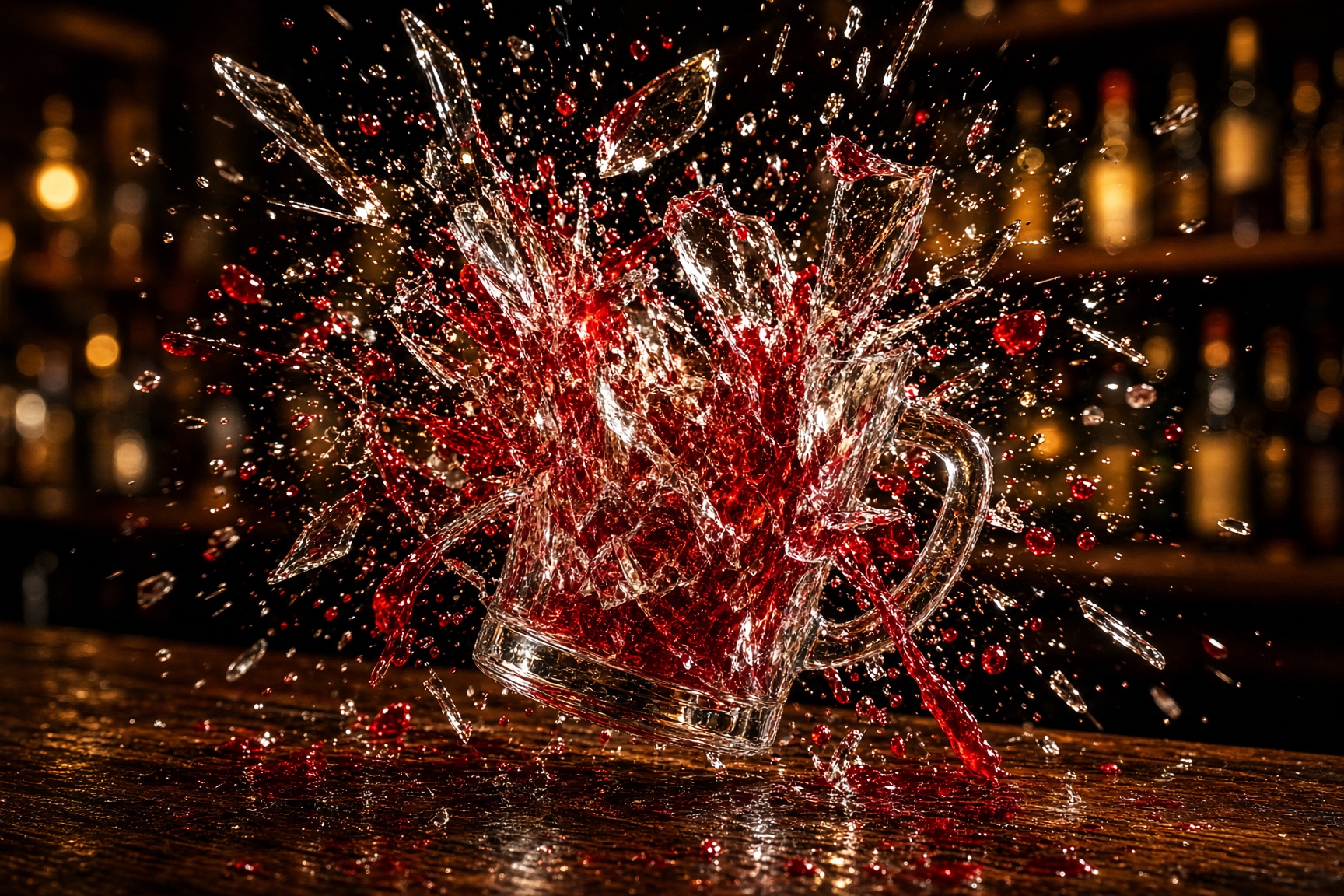
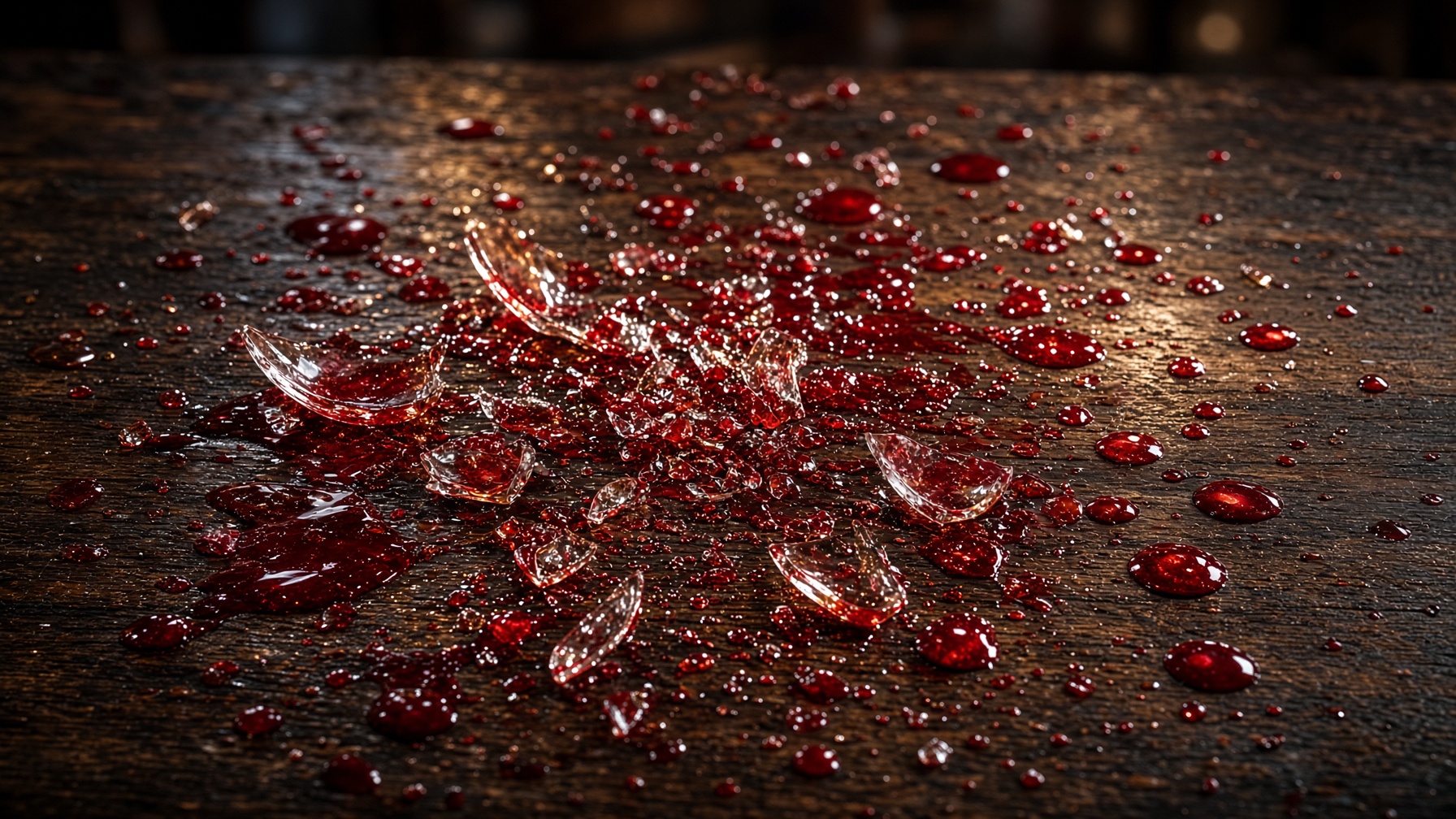
If the vessel is still intact when it hits, it usually shatters. The result is not a bar-room punch. It is deep cuts, often permanent scarring, and sometimes injury to an eye, a nerve, or an artery.
It is not a sport, a ritual, or how every Aussie pub night ends. It became infamous because the injuries look so much worse than a fistfight — a small argument, a public face that does not heal the same way.
This page explains the phenomenon. It does not describe how to commit the offence.
02 — The room
Australian pubs and beer gardens are social drinking rooms. People stand at the bar, sit at outdoor tables, talk over the pokies or the footy. Rounds get bought. Voices rise.
A “minor disagreement” can be a look, a spilled schooner, a comment about a mate, or nothing anyone can reconstruct the next morning. Glassing is when one of the objects already in someone’s hand becomes a weapon.
The horror, for a visitor, is the mismatch. The argument can look small. Faces have a lot of blood supply and a lot of important structures in a small space. The damage is not small.
03 — What was already on the table
In law they sit in the same family of offence. In physics they are not identical. South Australia names the sizes differently — a “schooner” there is what most states call a pot.
04 — Why courts treat it as serious
Deep facial cuts. Published cases speak of more than 20 stitches; some of more than 100.
Fractures around the eye socket, nerve damage, a permanently changed face.
Psychological injury is treated as part of the harm, not an afterthought.
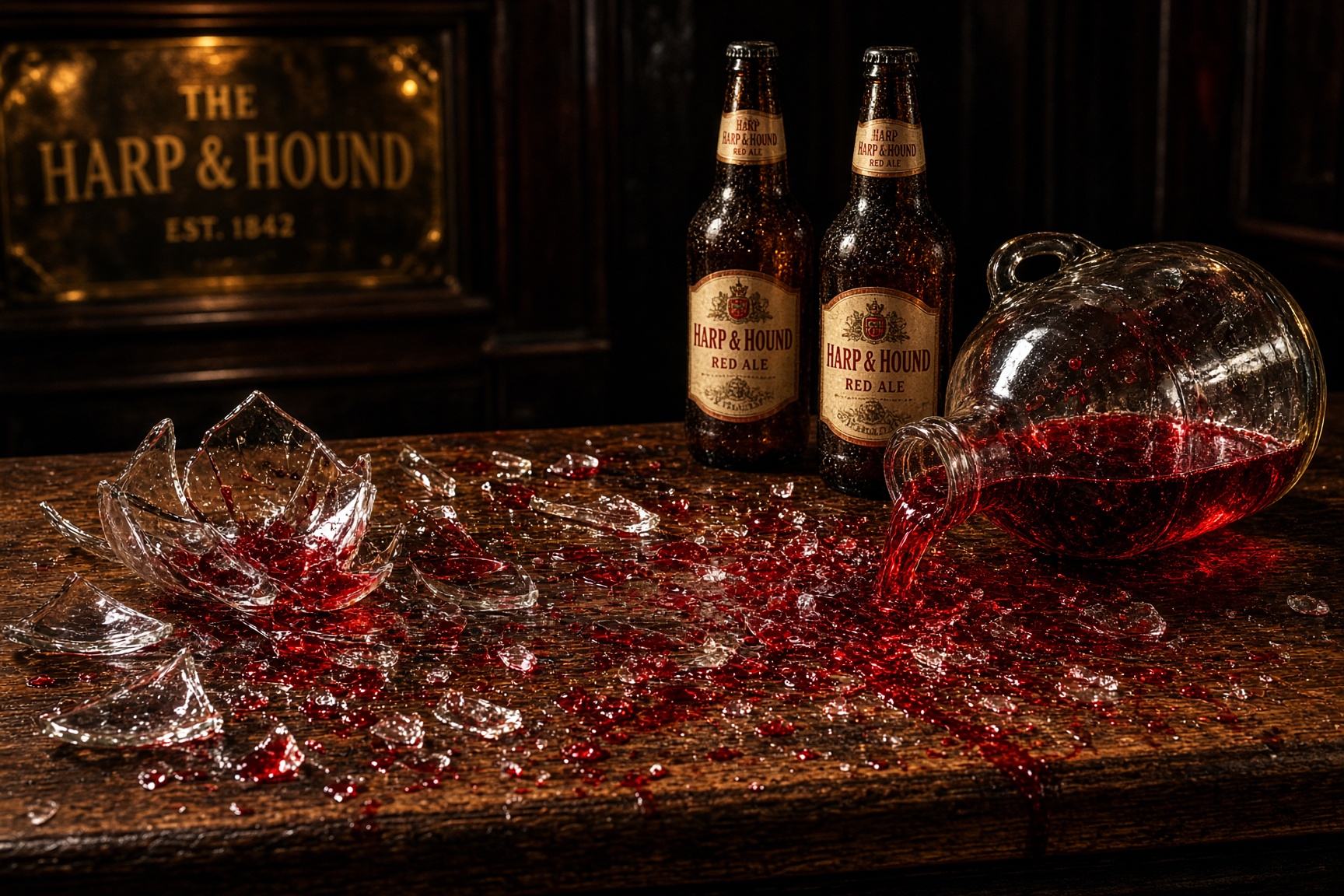
A drinking glass is common and shatters easily. A jug is heavier. An unopened tallie has more mass before it breaks. None of that is a how-to — it is why a “drink” is not a fist.
05 — Stats without the tabloid fog
Queensland ED study
9%
of alcohol-related assault injuries were glassing. Real. Not most pub fights.
Where it actually happens
33%
of glassings in that study were at home — more than licensed premises. Home was also the most common site of alcohol-related violence overall (31%).
994
NSW assaults in 2007 where a glass or bottle was the recorded weapon.
45–47
Recorded licensed-premises glassings in Queensland, 2008–09.
Inside licensed venues in the Queensland study, drinking glasses and bottles were used in roughly equal shares (44% and 45%). Across all settings, bottles were more common overall (75%).
A small Gold Coast venue sample was overwhelmingly male-on-male, concentrated in taverns and nightclubs, clustered after midnight on weekends.
UK emergency papers often cited locally put glass involvement in bar or alcohol assaults around 10–19% of those injury cases. The local 9% figure did not surprise clinicians.
Two caveats
06 — Charge sheet and the bar
It is charged as assault, unlawful wounding, recklessly causing serious injury, or grievous bodily harm — depending on the state and the injuries. Sentences in published cases are often measured in years, even for first-time young offenders, because courts treat the risk as obvious.
Queensland liquor rules name the problem items together: drinking glasses, bottles, jugs, stubbies. High-risk venues can be banned from serving in ordinary (non-tempered) glass.
07 — One paragraph
Australia has a strong pub culture and a long argument with alcohol. Glassing is what happens when that argument turns, in a minority of fights, into someone hitting another person in the face with the drink they were already holding. It is famous because the scars are public and permanent, not because it is how most nights end. It is treated as serious violence, not “boys being boys.” The glass, the jug, and the unopened tallie are just the objects that were already there when the night went stupid.
This is a visitor briefing from Kabi ground. Not a how-to. Not a tourist slogan. The colony sells the beer garden. You need the other half of the room.
Briefing for visitors
If you are flying into this country and planning a pub, beer garden, sports bar, nightclub or hotel yard — read this before you walk in. We are not Australians. We are Kabi people. This colony markets mateship, schooners and “she’ll be right.” That poster does not mention the room after midnight, when the glass in someone’s hand stops being a drink.
Glassing is the local name for an alcohol-fuelled attack using a drinking glass or bottle that was already there — on the table, in the fist, left on the rail. It is not a punch with an empty hand. It is not a fair go. In Queensland it is charged as wounding, assault occasioning bodily harm, or grievous bodily harm — not as a cute national custom. The injuries are not “a split lip.” They are faces opened, eyes lost, permanent scars, and a life that does not go back to the photo you took at sunset.
This briefing will not teach you how it is done. You do not need that. You need to know it exists, that it is ugly, and that the marketing of this country pretends it does not.
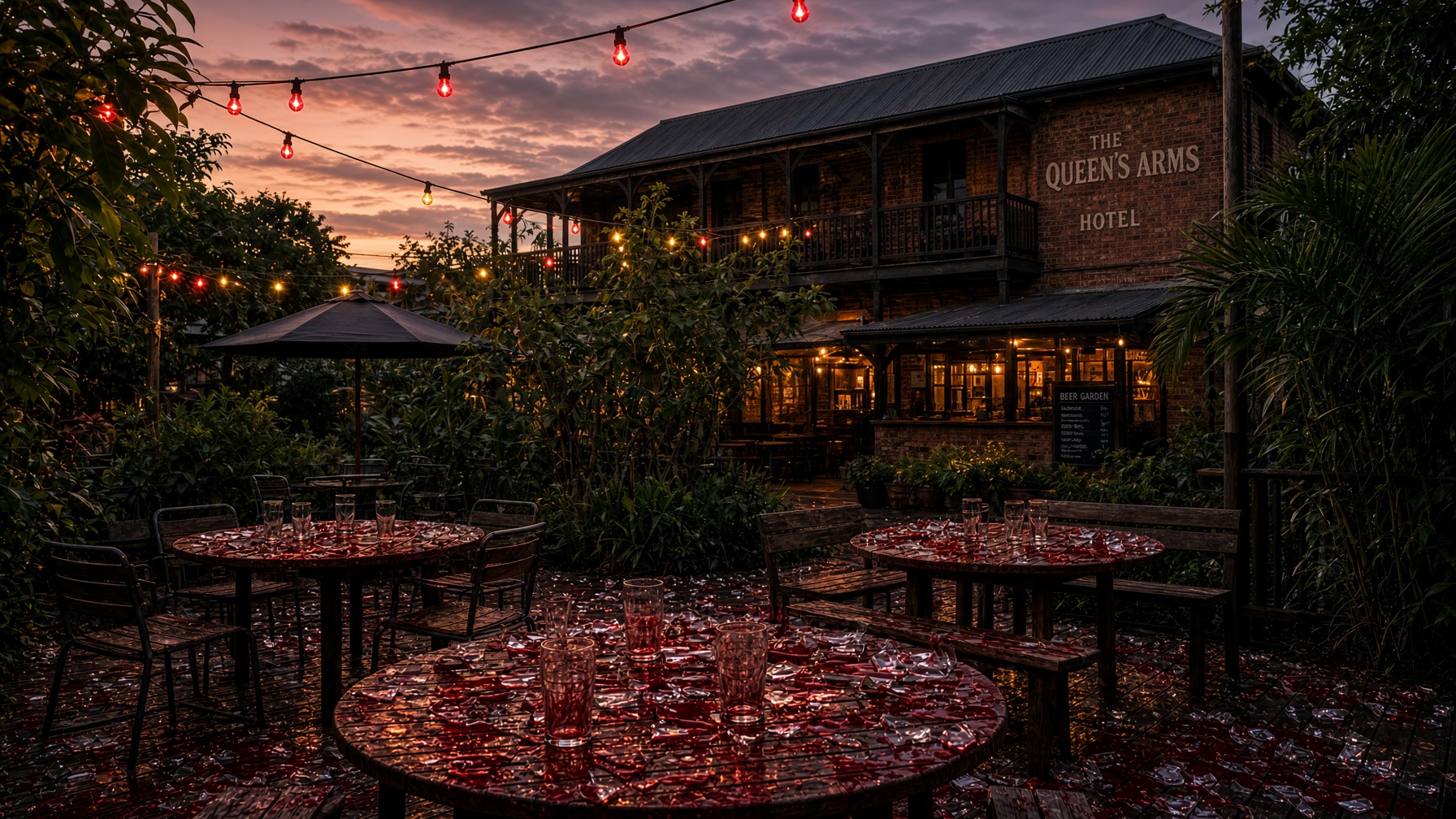
Tourism sells the brick hotel, the string lights, the beer garden, the “friendly local.” The kind of room the brochure loves. What the brochure leaves out is that licensed rooms in this colony are also where a specific, documented subset of drunken violence lives. Studies of licensed premises in Queensland and elsewhere have treated glassing as a known venue problem for years — facial wounds, under-reporting, the drink already in the hand.
You are meant to arrive enchanted. You are not meant to arrive briefed.
This is not Kabi culture. This is not our lore. This is not how we welcome people onto Country.
Alcohol was dragged through this continent as a colonial tool — grog as currency, grog as control, grog as the thing poured over dispossession and then sold back as national character. The same culture that still frames a night on the drink as harmless Australian identity also produces rooms where a stranger’s face can be ruined because someone was already holding a glass.
We are not saying every settler is waiting to do this. We are saying the colony’s self-image is a lie of omission. It will warn you about “the outback,” sharks, and snakes. It will not warn you about the beer garden.
That omission is the horror we want on the record: visitors are invited onto unceded Country, then left ignorant of a violence the colony treats as unfortunate atmosphere.
You came as a guest. Guests should be told the truth of the house they are walking into.
Kabi people did not invent this word and we do not claim it as ours. We are naming it because the colony will not brief you honestly, and because walking onto this continent blind is how people get hurt — in pubs, and in every other room the state pretends is settled.
If you visit, visit awake. You are on unceded Country. The lights in the beer garden are not a welcome from us. They are décor on a colony that still cannot tell the truth about its own violence.
Do not come here thinking the only danger is the wildlife they put on the poster.